A few years ago, a brand manager reached out to us after a painful production run with another factory.
Their initial golden sample had looked immaculate—flawless powder coat, tight thread engagement, crisp laser logo. But when the 5,000-piece production shipment landed in Long Beach, nearly 15% of the lids had minor seal misalignments that caused slow leaks during transit. The supplier’s response? "The sample was approved, so this meets production standards."
In the custom drinkware business, this story is surprisingly common.
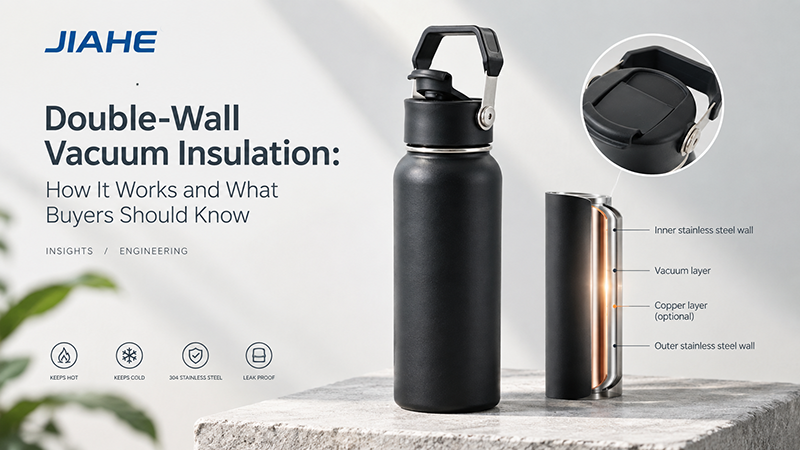
On paper, almost every factory quotation looks the same: standard 18/8 (SUS 304) steel, similar tooling times, and competitive FOB unit prices. But the real difference between a transaction vendor and a reliable manufacturing partner only surfaces when custom tooling hits tight tolerances, production schedules collide with holidays, or repeat orders start rolling in six months later.
If you are sourcing insulated bottles, travel tumblers, or custom lids for your brand, here are the non-negotiable operational checkpoints we recommend looking at.
1. Do They Ask the Right Questions Before Quoting?
A supplier who replies to an RFQ with only a unit price within twenty minutes is rarely reading your technical pack.
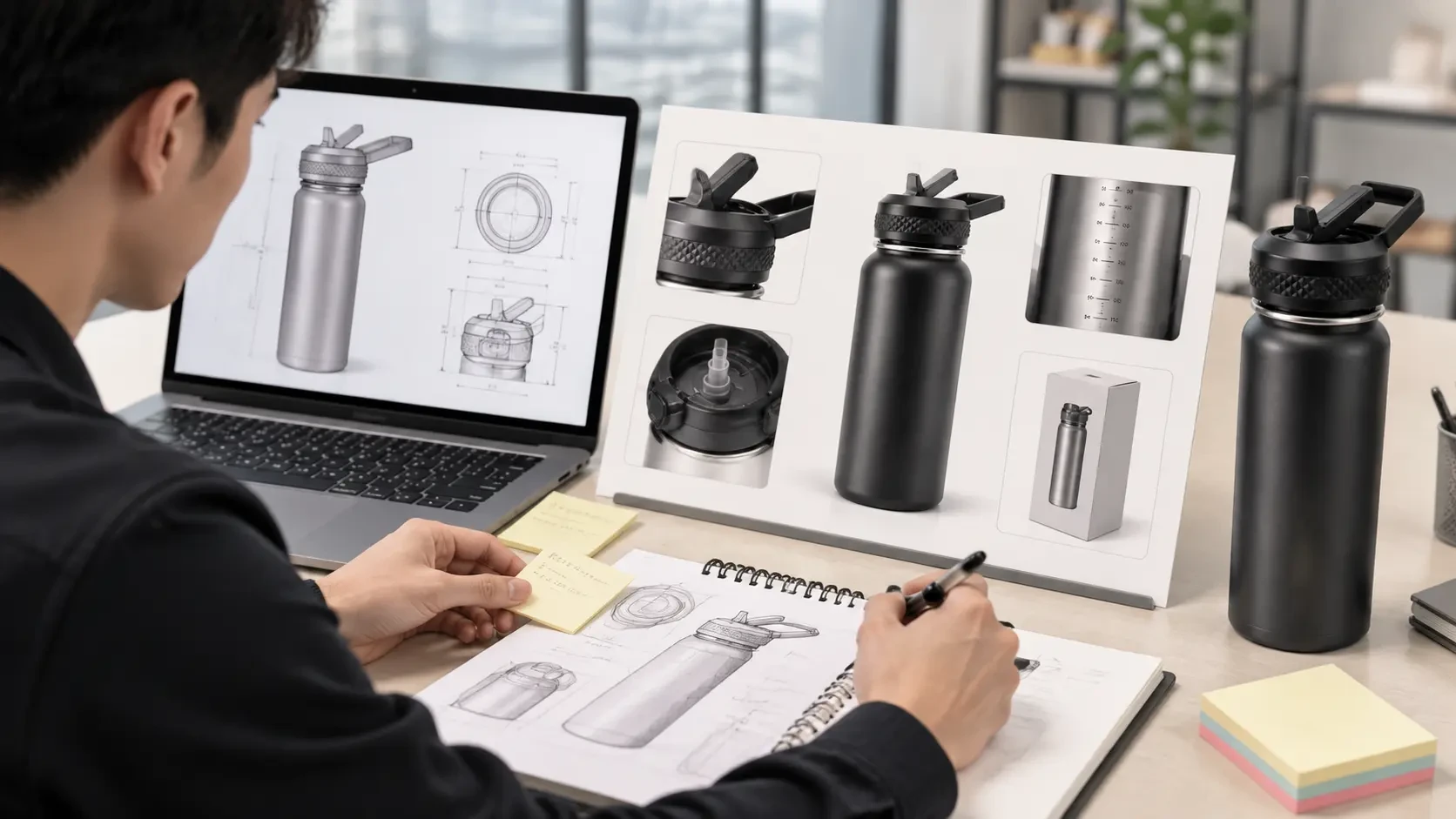
A finished water bottle looks deceptive in its simplicity. Yet turning an industrial design sketch into a shelf-ready product involves multiple interlocking systems: deep-drawing the inner liner, vacuum brazing, lid injection molding, silicone gasket hardness (Shore A), surface powder coating, and retail packaging drop resistance.
When reviewing your CAD file, sample, or tech pack, a reliable engineering sales team will dig into the friction points right away:
Neck weld & radius clearance: Does the bottle neck geometry allow sufficient wall clearance for uniform vacuum brazing?
Lid mechanics: Is the flip-top or straw spout engineered for single-hand use while maintaining a leak-proof seal under 50°C (122°F) pressure build-up?
Surface treatments vs. printing: Does your Pantone match require a matte rubberized spray or an electro-static powder coat to withstand commercial dishwasher abrasion?
If an engineering rep points out where your drawing might struggle during injection molding or vacuum heat retention before taking a deposit, they are saving you thousands of dollars in tooling modifications later.
2. Navigating OEM vs. ODM (Without Getting Boxed In)
Most sourcing guides treat OEM (manufacturing from buyer's drawings) and ODM (purchasing factory-designed platforms) as two rigid silos. On the shop floor, the best projects usually blend both.
Many brands don't need a $25,000 custom stainless steel body mold from scratch. You might pick an existing, field-tested 24 oz or 32 oz double-wall body, but engineer a proprietary, patented lid design with dual-drinking functions (direct sip plus straw) to create unique shelf differentiation.
When evaluating a partner's development capabilities, ask:
Tooling lead times: Can they take a 3D prototype from mold development to first off-tool samples (T1) in a verified 35-day window?
Tolerance management: How do they control concentricity between the plastic screw threads and the metal bottle neck to prevent binding or cross-threading?
For a comprehensive breakdown on choosing the right development path, see our practical guide:
[OEM vs. ODM Drinkware: Which Model Fits Your Brand Strategy?] (建议插入内链至相关文章)
3. Real Quality Control vs. "Strict QC" Slogans
Every factory brochure promises "strict QC." But what matters to your supply chain is what gets measured on the floor and where those checkpoints sit:
Production Stage | What Should Actually Be Checked | What Failure Looks Like |
Raw Material Inbound | Stainless steel composition verification (SUS 304 / 316) and food-grade PP/silicone resin certifications. | Metal impurities leading to premature rusting or non-compliant leachables. |
Post-Vacuum Processing | Thermal decay sampling across batches returning from high-temperature vacuum furnaces. | Lukewarm beverages within 4 hours due to micro-fissures or seal failure. |
Lid & Gasket Assembly | Torque testing, vacuum pressure leak testing, and opening-force consistency on locks and spouts. | Leaks during air freight pressure drops or daily bag carrying. |
Surface & Packaging | Cross-hatch adhesion tests on logos, coating scratch resistance, and export carton drop tests. | Peeling paint or crushed corners upon arrival at your 3PL warehouse. |
Ask your manufacturer what AQL (Acceptable Quality Limit) standards they inspect against and how they document non-conforming batches. A transparent manufacturer welcomes this conversation.
4. How They Handle the Inevitable Curveball
Manufacturing is an physical, mechanical process. Tooling steel can show micro-cracks, coating powders can vary between resin lots, and regional shipping lines can get congested.
The true character of your supplier is revealed when something doesn't go to plan:
The weak vendor: Goes silent, hides delays until the ship date has passed, or ships marginal goods hoping your receiving team won't notice.
The dependable partner: Flags the discrepancy immediately. They explain what happened, present two practical containment solutions (e.g., reworking a batch or air-freighting critical components at their expense), and outline the revised timeline so you can manage your retail buyers.
Proactive, bad-news-first communication is the foundation of any multi-year supply contract.
5. What Pre-Production Checklist Should You Lock In?
Before signing off on mass production and transferring deposits, never rely on loose WeChat messages or verbal confirmations. Everything must be tied to a signed golden sample and an explicit Technical Specification Sheet covering:
Approved Physical Sample: Stamped, dated, and kept in duplicate (one with the buyer, one on the factory QC bench).
Material Specifications: Explicit steel grades (e.g., SUS 304 inner/outer), BPA-free plastic certifications, and food-grade silicone ratings.
Performance Metrics: Documented thermal benchmarks (e.g., maintaining >55°C at 12 hours from a 95°C start in 20°C ambient room air).
Commercial Terms: Clear MOQ thresholds (e.g., 100 units for laser marking/custom colors; 3,000 units for dedicated mold runs) and FOB port definitions (such as Ningbo).
Change Management: A written agreement that no sub-supplier, resin grade, or tooling cavity will be altered without written customer sign-off.
What Working With JIAHE Looks Like
At JIAHE, we run our own drinkware production facilities in Ningbo, combining in-house metal fabrication and custom lid manufacturing with specialized high-temperature vacuum processing partners.
We don't promise an impossible zero-defect world. Instead, we offer direct engineering clarity:
Open technical dialogue: If a requested design feature risks thermal retention or increases mold failure rates, we tell you during CAD review—not after tooling starts.
Rigorous post-vacuum sampling: Thermal performance and vacuum integrity are systematically tested before finishing and assembly.
Direct accountability: You work directly with a team that understands both Western commercial standards and Chinese shop-floor realities, keeping lead times (typically 20–30 days for custom production) and specifications fully aligned.
Building a drinkware brand requires dependable repeat runs, not one-time luck. Focus on process discipline, communication integrity, and thorough documentation, and your supply chain will run smoothly for years.
Practical Sourcing FAQs
Why do first production orders sometimes differ from approved samples?
Golden samples are often hand-finished or produced on pilot tooling under close engineering supervision. When production scales to thousands of units per hour, variations in deep-drawing pressure, coating bake cycles, or resin shrinkage can emerge if strict line inspection isn't maintained.
Can custom lid molds be developed without re-tooling the steel bottle body?
Yes. Developing custom lid mechanisms (such as dual-sip spouts, magnetic cap holders, or safety-lock straw assemblies) while utilizing standard, proven stainless steel body profiles is one of the most cost-effective ways to launch a distinct product line with reduced capital investment.
What is the most common cause of bottle thermal failure?
Thermal breakdown is rarely caused by the steel grade itself. In the vast majority of cases, it traces back to neck weld micro-leaks, insufficient wall clearance creating internal contact (thermal bridges), or poor insulation cavity design inside the plastic lid.