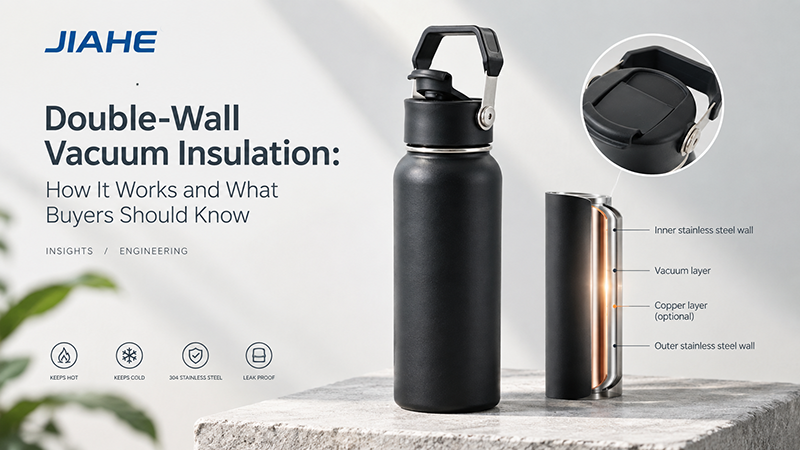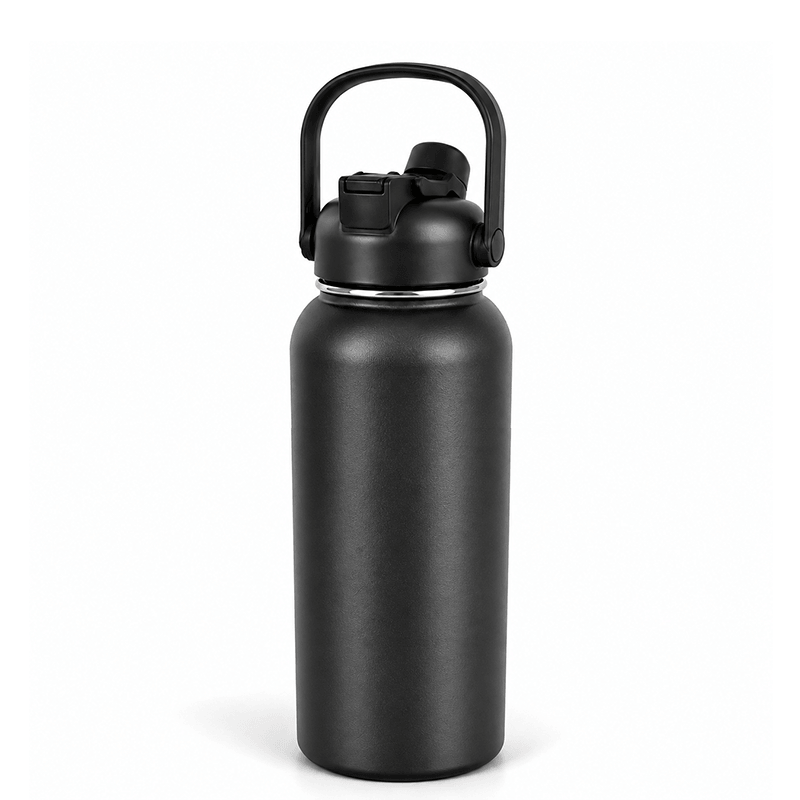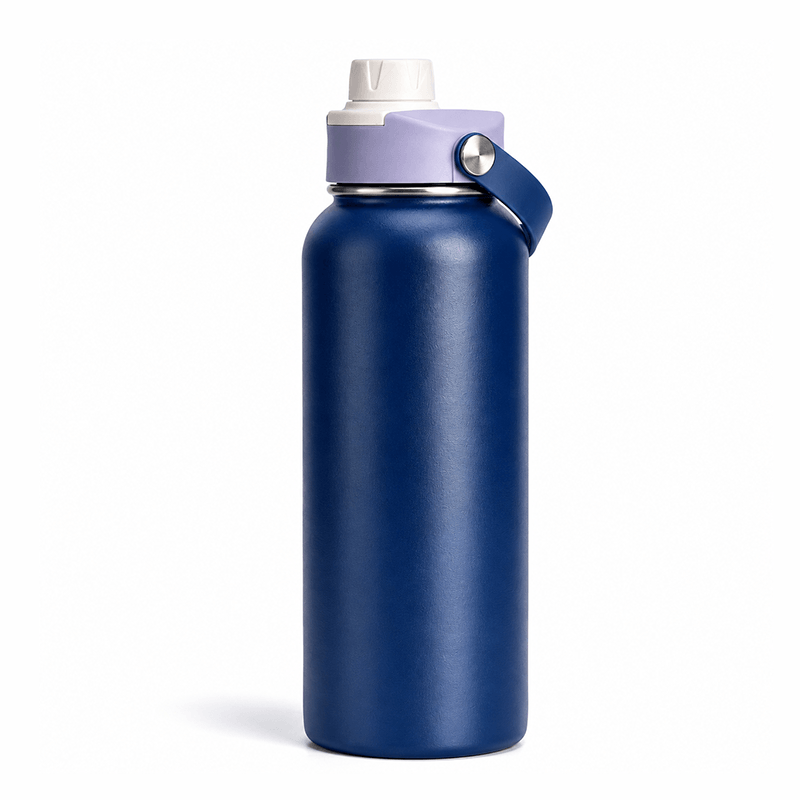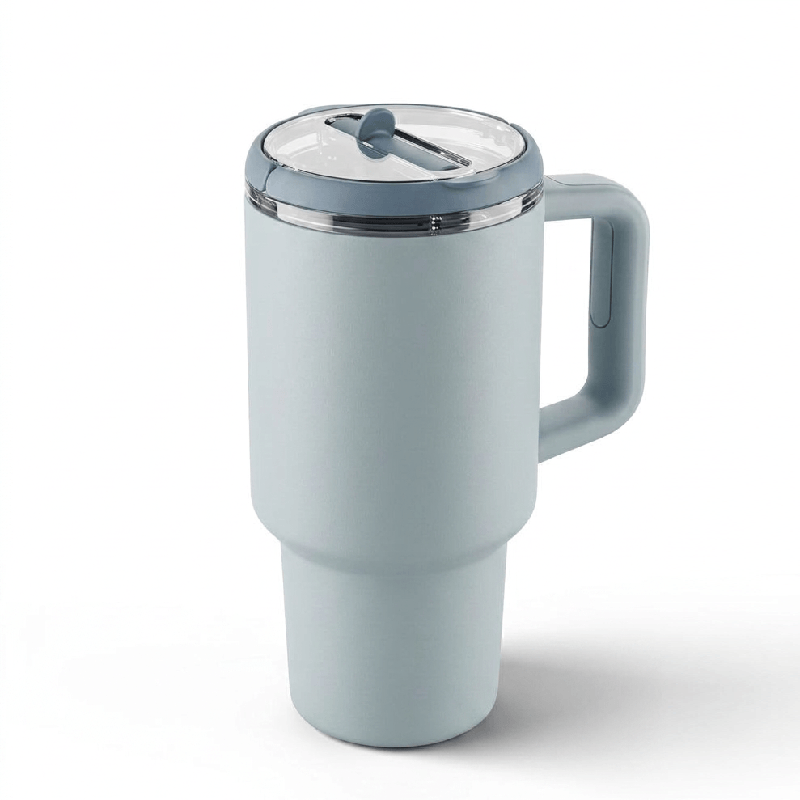
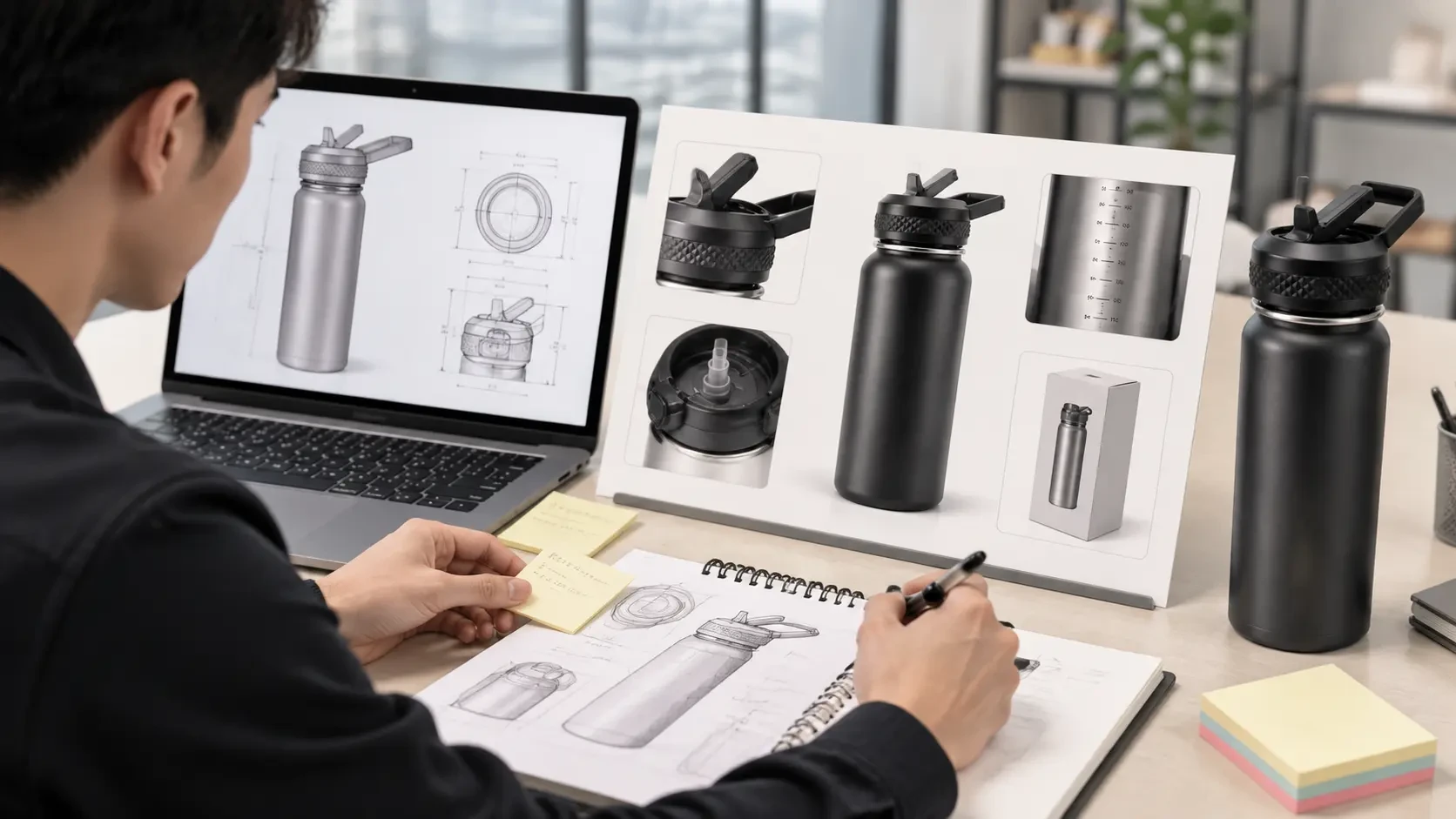
Every April and October, sourcing managers and brand owners leave international exhibitions—like the Canton Fair or Mega Show Hong Kong—with suitcases packed with stainless steel bottles, printed catalogs, and dozens of business cards.
During the show, almost every booth looks impressive. Golden samples on display feature pristine powder coatings, smooth lid action, and flawless laser-engraved logos.
Then, a week later, the follow-up emails roll in.
You receive a dozen quotations for a similar-looking 32 oz double-wall insulated tumbler, with FOB prices swinging anywhere from $2.80 to $4.50 per unit.
How do you distinguish a reliable, long-term manufacturing partner from a vendor playing a price-cutting game? Before you sign a purchase order or wire a 30% deposit, here is a practical framework to evaluate your potential drinkware suppliers.
1. Inspect Samples Beyond Their Surface Finish
A trade show sample gives you an initial impression, but it represents a "pilot run"—often hand-assembled and polished under optimal conditions. To evaluate how a product will perform during mass production, inspect the structural and functional details:
Material Grade Verification: Confirm the exact stainless steel grade for both the inner liner and outer wall. If a bottle is quoted as SUS 304 (or SUS 316 for enhanced corrosion resistance), ensure this is explicitly documented in the technical specification sheet rather than verbally promised.
Lid Mechanics & Fit: Test how the lid thread engages with the bottle neck. Does it screw on smoothly without cross-threading? Check the opening mechanism, straw retention, and ergonomics during drinking.
Sealing & Gasket Quality: Remove the silicone sealing ring. Is the rubber Shore A hardness appropriate for a tight seal? Does it fit snugly into its groove, or will it slip and cause leaks after repeated washing?
Surface Coating Durability: Inspect edges, handle joints, and bottom seams. Ask whether the finish is a standard spray paint, an electro-static powder coating, or a specialized rubberized finish—as this significantly impacts scratch and dishwasher resistance.
2. Compare Quotations on an Equal Baseline
When reviewing multiple quotes for a similar bottle, the lowest unit price rarely represents the best value. Lower prices often reflect excluded accessories, thinner steel walls, or basic packaging.
Before comparing prices, normalize every line item on a like-for-like basis:
Evaluation Element | What to Confirm in the Quote | Common Hidden Exclusions |
Bottle Body | Steel grade (304 vs 201), capacity, wall thickness, surface finish. | Single-color basic paint vs. custom Pantone powder coating. |
Lid Assembly | Lid type, drinking mechanism, material (e.g., PP vs. Tritan). | Straw accessories, silicone boots, or dual-opening upgrades. |
Branding | Logo application method, dimensions, and placement count. | Laser setup fees, multi-color silk screen tooling charges. |
Packaging | Inner egg-crate bulk, white box, or custom color gift box. | Barcode labeling, drop-test master cartons, FBA prep. |
Trade Terms | Agreed Incoterms (e.g., FOB Ningbo / FOB Shanghai). | Local port charges, documentation fees, or sample freight. |
Pro Tip: Always request an itemized cost breakdown. A supplier offering a $3.20 quote that includes custom gift boxes and drop-test packaging is far more cost-effective than a $2.80 quote that adds $0.50 in unmentioned extras later.
3. Clarify OEM & ODM Development Capabilities
Not every drinkware supplier offers the same scope of technical customization.
Some companies focus purely on applying logos and custom colors to standard stock shapes. Others can support full-scale product development—such as modifying lid structures, engineering leak-proof straw mechanisms, or opening custom molds.
When discussing custom projects, clarify responsibilities early by asking:
Scope of Customization: Can you adjust existing plastic lid structures, or only customize colors and branding?
Development Workflow: Do you provide 3D CAD modeling, rapid prototyping, and mold flow analysis in-house?
Tooling Ownership: Clarify mold ownership and exclusive usage rights in writing once custom tooling terms and agreed order volumes are met.
Production Arrangement: Which core processes (e.g., lid injection, assembly, vacuum brazing) are handled in-house versus through specialized sub-tier partners?
If you are currently evaluating your product customization path, read our complete breakdown on OEM vs. ODM Drinkware: Which Model Fits Your Brand Strategy?
4. Understand Real In-Line Quality Control (QC)
"100% Strict Inspection" is a common slogan in catalogs, but what matters is how quality is controlled on the factory floor.
For double-wall insulated drinkware, quality assurance spans multiple manufacturing stages. Ask your supplier to outline their actual inspection workflow:
Incoming Material Inspection: Checking raw stainless steel coil thickness, tube integrity, and food-grade plastic resins.
Vacuum Retention Testing: Are bottle bodies tested for thermal insulation twice (e.g., immediately after high-temperature vacuum brazing and again after final coating)? To learn more about how vacuum processing affects insulation performance, see our guide on Double-Wall Vacuum Insulation Demystified.
Sealing & Pressure Tests: How are fully assembled lids tested for liquid tightness (e.g., inverted pressure checks or vacuum seal tests)?
Final AQL Sampling: What Acceptance Quality Limit (AQL) standard is used for final packed goods before container loading? (Standard industry benchmark: AQL Level II - Critical 0 / Major 2.5 / Minor 4.0)
A transparent supplier will readily explain their testing criteria and share anonymized inspection logs or thermal decay reports from previous production runs.
5. Lock in Specifications Before Mass Production
Once you select a vendor, avoid rushing directly from a trade show chat to a full purchase order. Always sign off on a formal Pre-Production Sample (PPS) and a detailed Technical Data Sheet (TDS).
Ensure the following parameters are locked in writing:
Approved physical counter-samples (signed and dated by both parties)
Exact material grades for body, lid, gasket, and accessories
Pantone color matches verified under standard D65 light boxes
Vector artwork proofs (.AI / .PDF) with exact logo placement dimensions
Written thermal performance benchmarks target based on specific bottle capacity and lid configuration
Agreed AQL inspection standards and lead-time schedules
A Checklist for Comparing Drinkware Vendors
Use this quick checklist during your post-fair evaluation:
[ ] Sample Performance: Does the physical sample match the technical spec sheet in weight, wall clearance, and thread fit?
[ ] Material Transparency: Are steel and plastic grades explicitly stated and supported by food-contact test reports?
[ ] Quote Normalization: Are packaging, logo application, and delivery terms fully accounted for across all quotes?
[ ] Engineering Support: Can the supplier flag potential mold or assembly issues during design discussions?
[ ] Quality System: Does the supplier have documented thermal, leak, and AQL inspection procedures?
[ ] Communication: Does the contact person provide clear, technical, and timely responses to complex questions?
Choosing a Supplier Is Building a Supply Chain Partnership
Selecting a drinkware partner involves more than choosing a stock bottle and agreeing on a unit price. It requires aligning on product engineering, material standards, quality control, and reliable delivery. For deeper insights on evaluating long-term factory capabilities, explore our practical framework on How to Choose a Reliable Drinkware Manufacturer.
At JIAHE, we partner with brand owners, importers, and distributors on OEM and ODM drinkware projects, specializing in stainless steel insulated bottles and functional lid innovation.
Our core expertise lies in lid design, engineering development, precision assembly, and rigorous quality coordination. For stainless steel bottle fabrication and vacuum processing, we work closely with specialized, long-term manufacturing partners under unified engineering and QC oversight. We maintain stable 30–40 day production schedules for standard repeat runs, while aligning on realistic lead times for new custom tooling. This focused structure allows us to deliver high-quality, fully customized drinkware solutions with transparent communication from initial CAD review through final shipment.
Frequently Asked Questions
How soon should I follow up with a drinkware supplier after the Canton Fair?
Send your formal Request for Quotation (RFQ) within 3 to 5 business days after the show. This allows vendors to return to their offices while your project requirements and meeting discussions are still fresh.
Should I choose the drinkware supplier with the lowest price?
Not necessarily. Always verify whether the lower price uses different steel grades, thinner walls, basic single-wall packaging, or excludes custom color matching. Evaluate the complete value package rather than unit price alone.
Is a trade show booth sample sufficient for mass production approval?
No. Booth samples are often handled by numerous visitors and may not reflect your exact custom specifications. Always request a dedicated Pre-Production Sample (PPS) with your specified Pantone colors, logos, lid structure, and packaging before issuing a production deposit.
What is the advantage of working with a supplier specializing in lid engineering?
Lids are the most complex mechanical component of any insulated bottle—containing threads, moving flip-caps, straw valves, and silicone seals where leaks most commonly occur. Working with a team focused on lid engineering ensures tighter tolerances, reliable sealing, and better overall user experience.